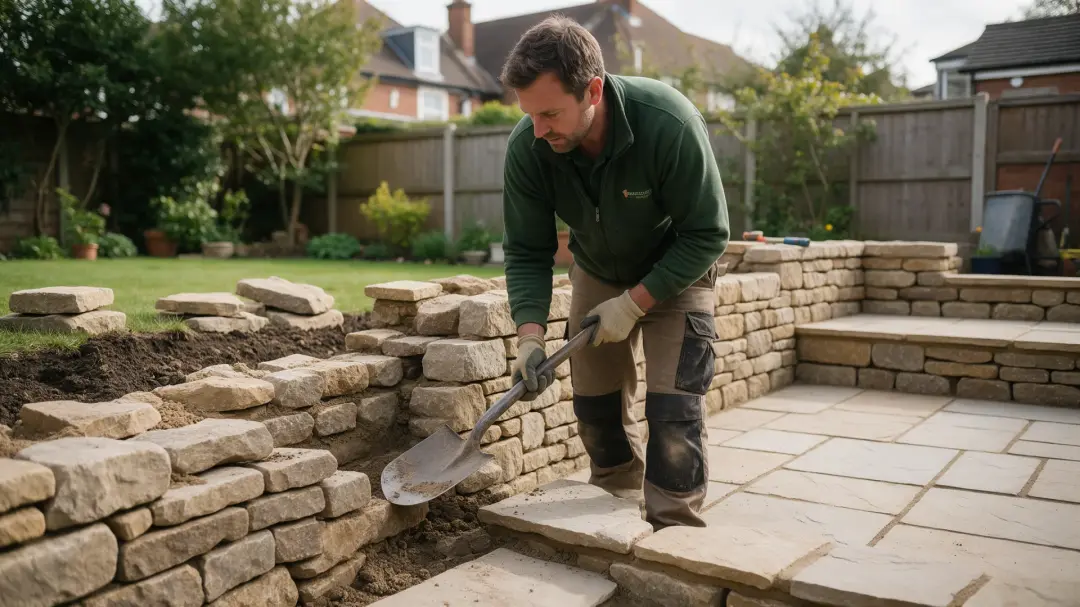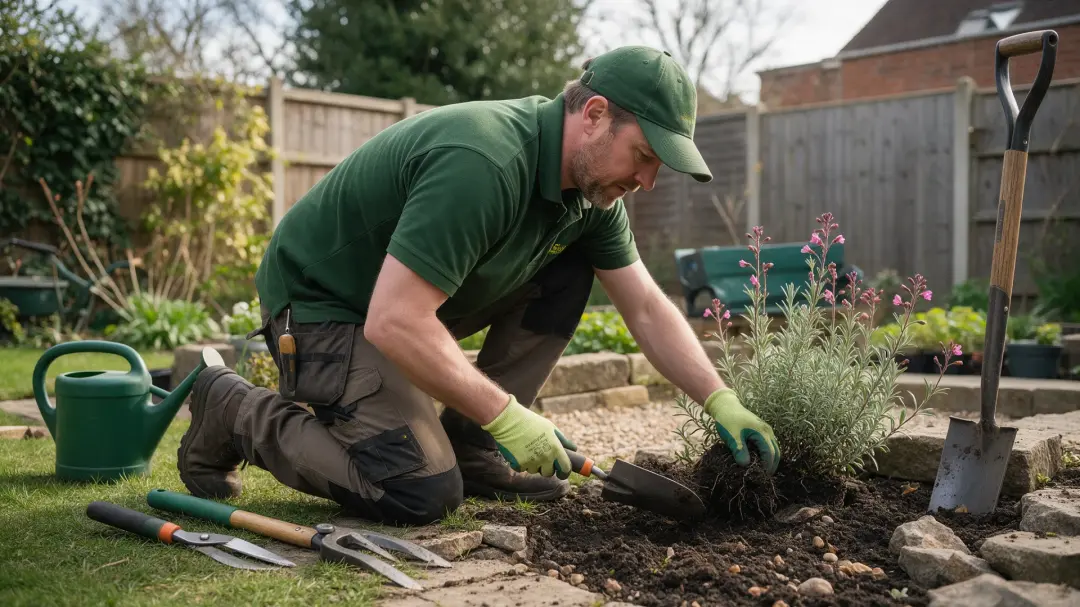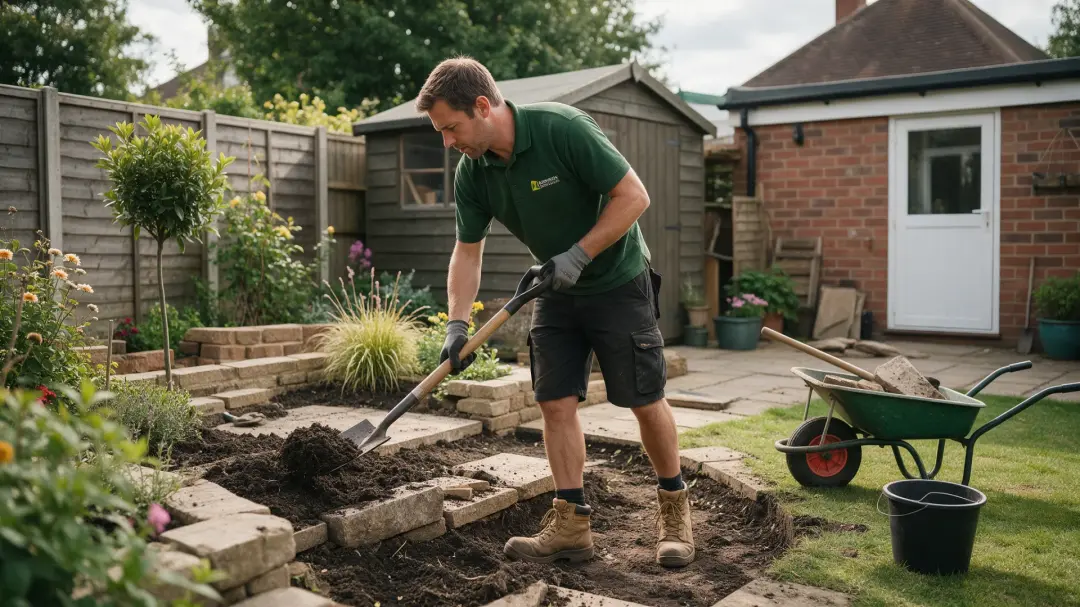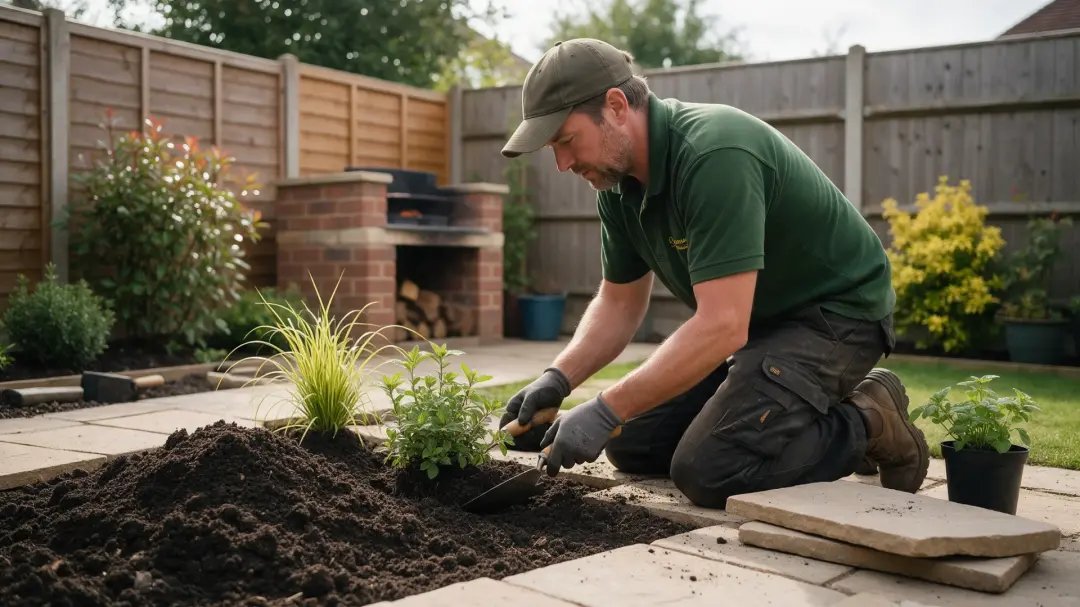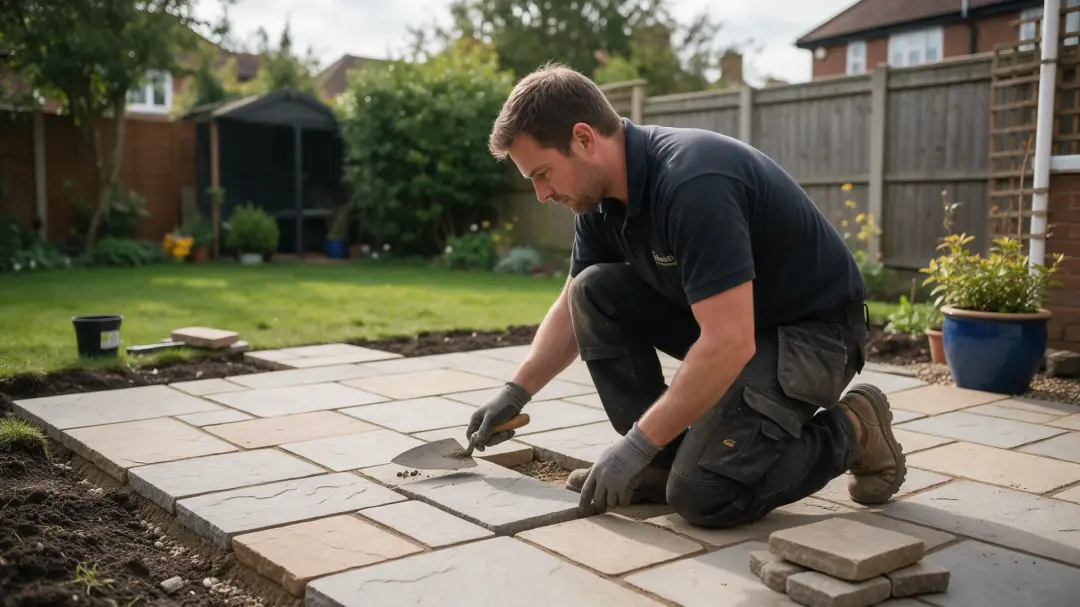
Hard landscaping creates a garden’s built structure; soft landscaping supplies its living elements. Paths, walls, decking and paving are hard landscaping. Lawns, trees, shrubs and planted borders are soft landscaping. Most practical projects require both, coordinated rather than treated as competing alternatives.
Sources and figures checked 12 October 2026. Publication dates and product-specific limits are identified where relevant.
Recognise built features
The RHS design guide includes patios, paths, pergolas, raised beds and fences among hard features. They establish access, seating and organisation. A raised bed’s wall is structure, while the plants inside are living landscape. Drainage and level changes often connect both in one detail.
Understand the living elements
Soft landscaping includes trees, hedges, lawns and herbaceous planting, alongside the preparation needed for establishment. Appearance changes with seasons and maturity. Plan eventual dimensions rather than nursery-pot size. Suitable soil, water and light matter as much as the arrangement of colours on a planting plan.
Sequence the project properly
Settle the combined design first. Heavy construction normally precedes final planting so machinery does not cross fresh turf or compact new beds. Protect retained roots and useful vegetation. Keep access for later tasks and agree how compacted soil will be restored before plants are introduced.
Compare water behaviour
Impermeable surfaces shed rain unless water has a suitable destination. Soil can permit infiltration but saturated or compacted ground may drain poorly. Permeable paving is still hard landscaping: environmental performance does not follow the label alone. Consider the entire water route and the underlying ground.
Plan water-conscious care
The RHS State of Gardening Report 2025 describes household use around 140 litres per person daily, with roughly 5–6% allocated to gardens, outdoor cleaning and water features. These broad figures are not a measured saving your project can deliver. They explain why planting choices, water collection and hard-surface upkeep all deserve attention.
Be realistic about maintenance
Paving requires cleaning and joint care; planting requires establishment watering and seasonal attention. A fully paved garden is not maintenance-free, and borders are not necessarily harder work than lawns. List the recurring tasks for the actual design rather than judging upkeep solely by whether a material is living or built.
Use one coordinated brief
There is no universal percentage of paving and greenery for every plot. A compact terrace with meaningful borders may suit a garden in Gloucester better than copying a large-property layout. Discuss how edges meet soil, how roots are protected and who handles establishment. Separate costs while retaining one coordinated plan.
Consider a typical shared design problem
Imagine a garden where a muddy route crosses a patchy lawn to a shed. A stable path addresses the access problem through hard landscaping. Improving the surrounding soil and choosing suitable planting addresses the living space through soft landscaping. Building the path alone may leave damaged ground beside it; planting alone does not necessarily provide a reliable walking surface. This is an illustrative design problem, not a completed customer project. It shows why the two kinds of work often need planning together.
Allocate budget to the cause of the problem
Decide what currently prevents the garden from working. If water collects beside the house, buying ornamental plants is unlikely to fix the underlying levels or drainage. If a usable terrace feels bare and exposed, another paved area may be less helpful than well-chosen planting. Ask for separate cost lines while retaining one design. This makes it possible to phase improvements sensibly, with construction and soil preparation completed when required and later planting added without undoing the framework.
Summary
Hard landscaping provides the framework while soft landscaping brings growth and seasonal change. Discuss both with ALG Gardening And Landscaping Ltd so built features support the living garden and the activities you want to enjoy.