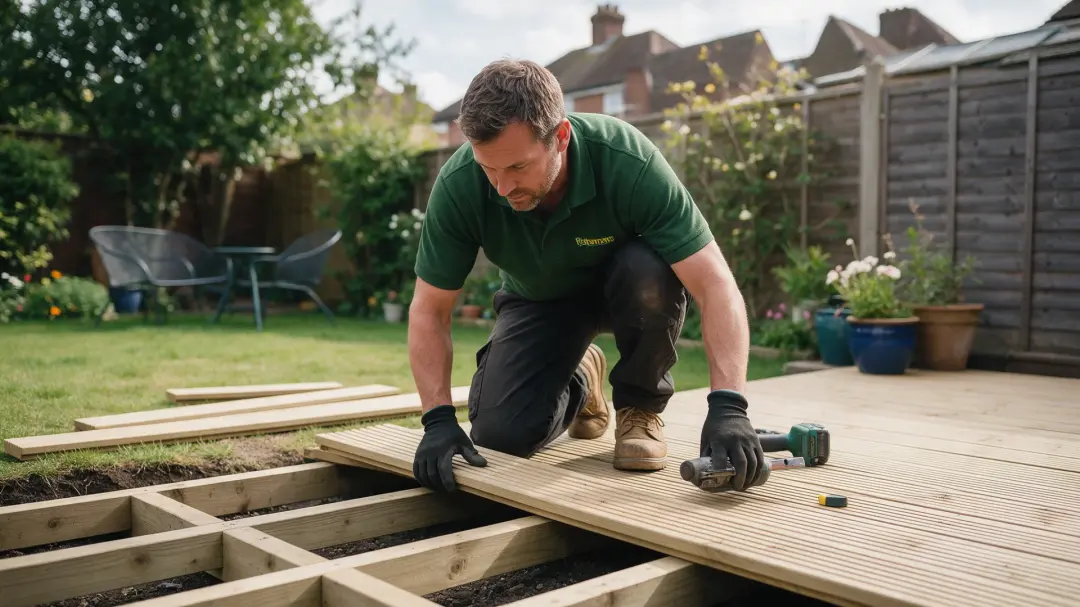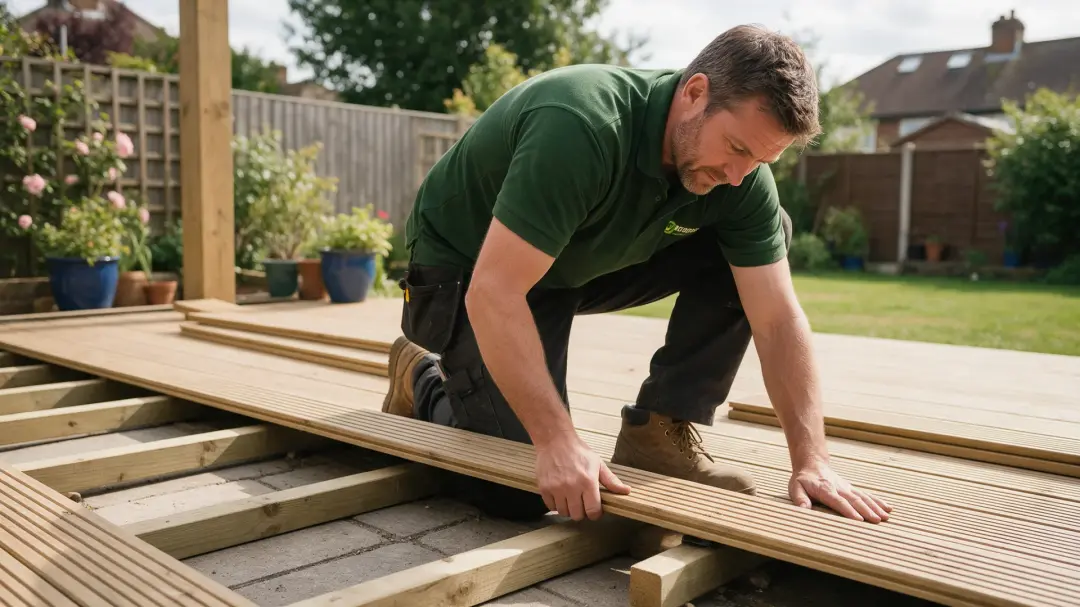
Clean decking by sweeping away debris, washing with a product approved for the board material, gently brushing and rinsing thoroughly. Inspect the structure before applying any timber finish. Timber and composite need different treatment: do not put wood oil on composite unless its manufacturer specifically requires it.
Sources and figures checked 12 October 2026. Publication dates and product-specific limits are identified where relevant.
Identify your boards and finish
Find the installation paperwork or ask whether the boards are softwood, hardwood or composite. Check the exact product instructions, including restrictions on bleach, solvents and pressure washing. Test a concealed area and let it dry before treating the visible deck. Protect plants and keep cleaning runoff away from ponds. A wood-effect surface does not necessarily mean timber.
Clear and inspect before washing
Move furniture and pots, sweep leaves and clear accessible gaps without damaging fixings. Check steps, board ends and the edge nearest the house. Raised screws, splinters and soft patches need attention. If a board flexes unusually or a railing moves, stop using that area and have it assessed. Cleaning cannot repair decay in the frame.
Wash timber without tearing the grain
Use a mild soap solution or compatible cleaner. Work in sections, brush along the grain and rinse before dirty water dries. An aggressive jet can tear fibres and leave pale stripes. Inspect again once dry. Do not sand damp timber, coat over algae or assume a powerful washer is suitable simply because the deck looks robust.
Use composite-specific cleaning limits
Warm soapy water and a soft brush suit many composite boards. The current Trex care guide permits up to 3,100 psi and a minimum nozzle distance of 203 mm for specified Transcend, Enhance and Select products. These are product-specific limits, not settings for every deck. Follow your own brand’s instructions and rinse thoroughly.
Reduce algae and refresh timber finishes
Clear organic deposits and drainage gaps; raise pots on suitable feet. Persistent growth in shaded corners calls for attention to trapped moisture. Grooved decking can still be slippery when dirty. Choose a finish compatible with the timber and existing coating, removing flaking film where required. Observe the specified drying and rain-free curing periods.
Set a seasonal routine
The Timber Decking and Cladding Association recommends thorough cleaning at least annually, preferably in spring, and every-other-year renewal for relevant water-repellent coatings. These current maintenance intervals were checked in October 2026, not drawn from an accident survey. Check after winter and clear autumn leaves regularly.
Recognise when replacement is needed
Widespread decay, repeated movement or damaged supports justify inspection. Ask whether individual boards can be replaced or the subframe is failing too. Keep photographs and the names of products used so an installer can identify recurring problems. Covering damaged timber with stain will not make the structure safe.
Treat food, grease and rust marks appropriately
Remove food deposits promptly and use the board manufacturer’s recommended stain method. A barbecue mat must also be approved for the surface: some backing materials trap moisture or mark composite boards.
Rust beneath furniture should be traced to the metal item, not repeatedly washed off without addressing its source. Lift furniture when moving it rather than dragging the legs. Avoid abrasive pads on capped boards and keep a record of any cleaner tested, including whether it altered the colour after drying.
Choose a practical cleaning day
Pick conditions that allow safe working and sufficient drying before the deck is used or coated. Divide a large area into reachable sections so you do not walk across wet cleaner. Keep children and pets away until the product instructions say it is safe.
Check the forecast against the finish’s curing requirements rather than assuming a dry morning is enough. Before replacing furniture, inspect gaps and edges once more and ensure rinsing has not left debris lodged where water needs to escape.
Summary
A sound deck needs appropriate cleaning, clear drainage and secure supports. If inspection reveals ageing boards or a failing frame, explore replacement decking with ALG Gardening And Landscaping Ltd rather than covering defects with another coat of stain.