Thinking about how to make your patio safe and slip-resistant? Find practical solutions for moss removal, anti-slip treatments, and better drainage.
A safe patio should be easy to walk on, simple to maintain, and suitable for the changing UK weather. Rain, frost, moss, algae, loose slabs, and poor drainage can all increase the risk of slips and trips. This guide explains how to make your patio safer, cleaner, and more slip-resistant.
Why patio safety matters
A patio may look neat and tidy at first, but if it's not built or maintained properly, it can become unsafe to use. This is especially important for families, older people, visitors, and anyone moving garden furniture, tools, food, or drinks across the space.
One of the main risks is slipping and falling. Smooth paving, poor drainage, and shaded areas can all make a patio slippery when it's wet, and moss and algae can build up over time, making the surface even more dangerous.
Loose slabs, uneven levels, broken edges, and poorly-fitted joints can also catch your foot and cause you to trip or fall. An unsafe patio can also damage your garden and property if water cannot drain away properly. This is because it can collect on the surface, weaken the base, or run towards the house, which can lead to stains, movement in the slabs, and possible damp issues near your walls and doors.
Common causes of slippery patios
Slippery patios are a common problem in the UK because of the wet and damp weather. Rain, frost, shade, and fallen leaves can all make your outdoor surfaces harder to walk on, and one of the main causes of slippery surfaces is moss and algae growth. These often appear on patios that have stayed damp for a long time, patios in shaded gardens or areas with poor airflow. Poor drainage is another common cause, because if rainwater can't drain away properly, it can end up sitting on the surface, creating puddles.
Over time, this can make the patio more likely to become stained, dirty, and slippery. Fallen leaves, soil, garden waste, and mud can also make patios unsafe, especially during autumn and winter. Regular cleaning, good drainage, suitable paving, and good maintenance can help you reduce these problems and keep your patio safer throughout the year.
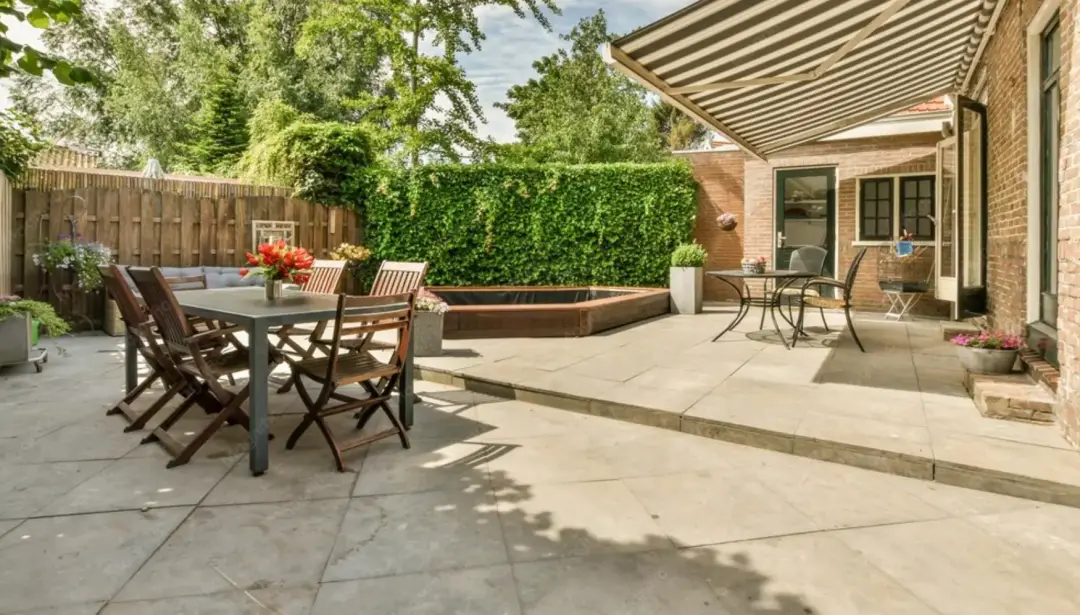
Choosing slip-resistant patio materials
Choosing slip-resistant patio materials is one of the best ways to make your outdoor space safer and easier to use. Patios are often exposed to rain, frost, damp weather, fallen leaves, moss, and algae, and these conditions can make a smooth or poorly-chosen surface slippery.
Slip-resistant materials are designed to give you better grip underfoot, even when the surface is wet. Textured paving, riven natural stone, and outdoor porcelain with a suitable grip rating can all help improve your safety, which is especially important for families with children, older people, pets, or anyone who uses the patio often.
Slip-resistant paving works best when it's combined with good drainage and regular cleaning because it helps reduce standing water, moss, and dirt build-ups. By choosing suitable patio materials from the start, you can create an outdoor area that's safe during all types of weather.
Keeping your patio clean and clear
Keeping a patio clean and clear is one of the easiest ways to reduce slip and fall risks. Patios can quickly become wet, dirty, and slippery because of rain, shade, frost, moss, algae, and fallen leaves. Sweeping the patio often is a good way to reduce this issue and remove excess leaves, soil, twigs, and garden waste. This is especially important during autumn and winter since damp leaves can become very slippery.
Washing the surface with warm water and a suitable patio cleaner can also help remove any dirt, stains, moss, and algae. A stiff brush can also be used to clean the joints and any textured paving. Weeds should be removed from the gaps between the slabs, and clearing your drains, channels, and edges can help rainwater drain away properly and reduce the risk of standing water.
Removing moss, algae, and dirt
Moss, algae, and dirt can build up on patios throughout the year, and removing this build-up is a good way to reduce slip risks and keep your patio looking tidy. A good place to start is by sweeping the patio with a stiff outdoor brush to clear any loose dirt, leaves, and debris. This should be done often, particularly during autumn and winter.
For light moss or algae, you can simply scrub the patio with a mix of warm water and a suitable patio cleaner. However, it's important to follow the product's instructions and choose a cleaner that's safe for your paving material. For heavier build-ups, a pressure washer can help, but it should be used carefully since too much pressure can damage soft stone or remove the jointing between the slabs.
Improving patio drainage
If rainwater cannot drain away from your patio properly, it can sit on the surface and create puddles. These wet areas can quickly become slippery, which can be a big problem for smooth paving or parts of the patio that don't get that much sunlight. Poor drainage can also cause moss and algae to start growing, and they often grow in damp areas, which can make the patio feel slick or slippery underfoot. Over time, this can increase the risk of slips and falls.
Standing water can also stain the paving or weaken the base beneath the patio, which can lead to uneven slabs and trip hazards. Good drainage can help rainwater move away from the surface, and this can involve you adding a slight slope, suitable channels, or a well-prepared base to your patio's structure.
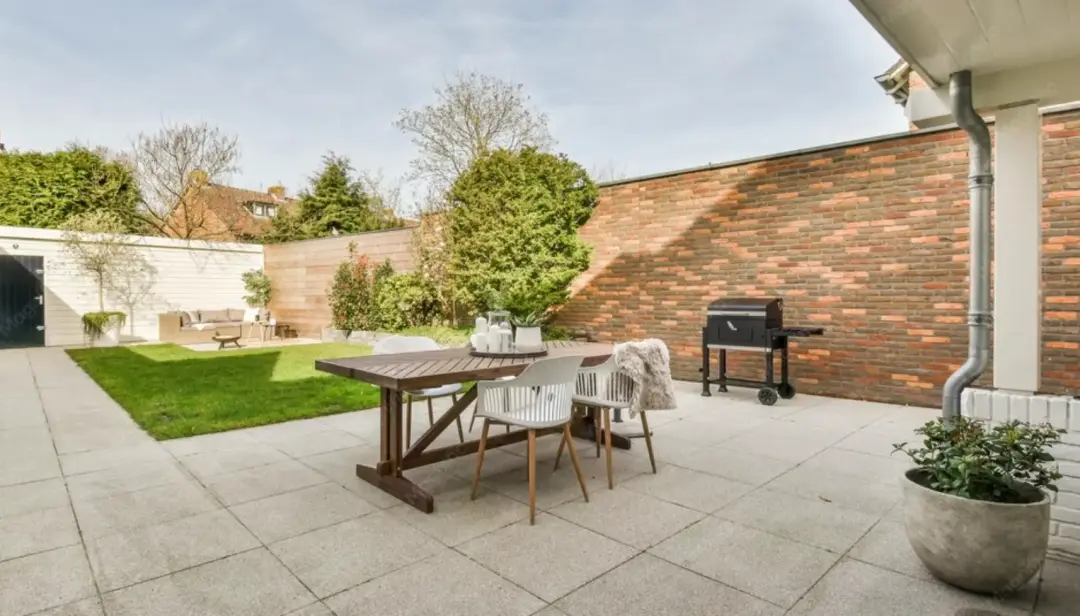
Checking for loose or uneven slabs
Checking for loose or uneven slabs is an important part of keeping your patio safe and tidy. Over time, patio slabs can move due to poor ground preparation, heavy use, frost, rain, roots, or water getting beneath the surface. When this happens, the patio can become uneven, unstable, or raised in certain areas.
Loose slabs can rock when they're stepped on, which can cause you to lose your balance and fall. Uneven slabs can also become trip hazards, especially for children, older people, visitors, and anyone carrying food, drinks, garden tools, or washing. Even a small raised edge can be enough to cause a fall if it's not easy to see. Checking the patio regularly allows you to spot problems early on and prevent any further issues.
Using sealants and anti-slip treatments
Over time, patio surfaces can become slippery, stained, or harder to clean. However, applying a suitable sealant can help you protect the paving by reducing how much water, dirt, and grime can soak into the surface. Anti-slip treatments can add extra grip underfoot, making the patio safer to walk on when it's damp or wet. This is useful for smooth paving, shaded areas, steps, and parts of the garden that are used often. Having a better grip can also reduce the risk of slips and falls.
When dirt and algae aren't able to settle into the paving, the patio can be easier to clean. Additionally, some treatments can also protect the patio against stains from leaves, plant pots, food, and drinks. It's important to choose a product that suits your patio's material, since not all sealants work the same on every surface. When they're applied correctly, sealants and anti-slip treatments can improve your safety, protect the paving, and extend the lifespan of the patio.
Making steps and edges safer
Making the steps and edges safer can greatly improve the safety of your patio. Steps, raised areas, and changes in your patio's level can be easy to miss, especially in poor light, wet weather, or busy gardens. If these areas aren't maintained properly, they can quickly become trip hazards.
Your patio steps should be even, stable, and wide enough to use comfortably. This is because any loose slabs, broken edges, or uneven heights can cause people to lose their balance and injure themselves. However, adding a textured surface to the steps can improve your grip. The patio edges should also be secure and clearly defined, since weak or unfinished edges can move over time and make the paving unstable.
Adding outdoor lighting for better visibility
Adding outdoor lighting can make your patio much safer to use, especially in the evening, during winter, or on dull days. Good lighting helps people see where they're walking, which makes it easier for them to spot steps, edges, uneven slabs, wet patches, and garden furniture. This can reduce the risk of slips, trips, and falls.
Patios can often become slippery because of rain, frost, moss, algae, and fallen leaves, and when these hazards are hard to see, the chances of an accident happening can increase. Although good lighting won't stop the surface from getting wet, it can help you notice any problem areas and move more carefully.
You can place outdoor lights along your paths, near steps, around your seating areas or close to your patio's edges. Wall lights, post lights, and low-level lights can also be used to improve your patio's visibility without making the space feel too bright.
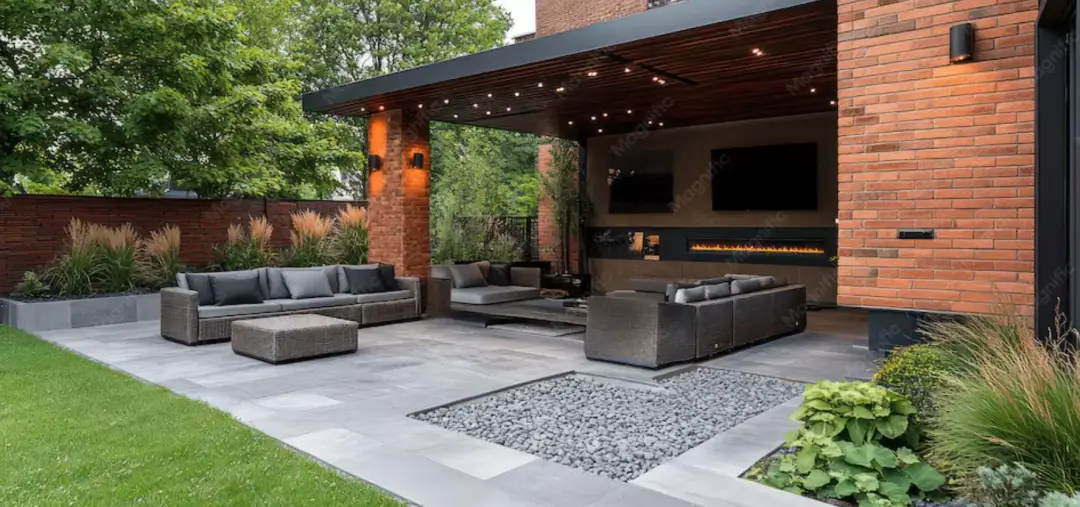
Seasonal patio safety tips
During spring, you can clear away any dirt, moss, algae, and leaves that have been left over from winter. This can help you improve your grip and make it easier to spot issues like loose slabs, cracks, or damaged joints.
Patios tend to be used more often for seating, dining, and family time during the summer. In this case, it's a good idea to keep your furniture stable, clear any walkways, and remove any weeds growing between the slabs. Spilt drinks, food, or garden soil should also be cleaned up quickly to prevent slippery patches and algae growth.
In autumn, fallen leaves can become wet and dangerous underfoot, and because of this, sweeping the patio regularly is one of the best ways to reduce slip risks. Your drains and channels should also be kept clear so that rainwater can drain away properly.
Frost and ice can also make your patio unsafe, and during this time, you should be extra careful when you're walking on the surface. You should also avoid using the patio during icy conditions as much as possible, too.
When to repair or replace your patio
Knowing when to repair or replace your patio is important in order to keep it safe and slip-resistant. Over time, patios can become worn out, uneven, cracked, or slippery, and although small problems can often be repaired if they're caught early enough, leaving them for long periods of time can make the patio unsafe.
Your patio can be repaired if you have a few loose, raised, cracked, or sinking slabs. These issues can create trip hazards and allow water to collect on the surface. However, repointing the joints, relaying loose slabs, improving your drainage, or cleaning away any moss and algae can often make the patio safe again.
A patio tends to need replacing if the damage is widespread, if the base has collapsed, or if the surface stays slippery even after it's been cleaned. Large areas of movement, poor drainage, broken edges, and repeated repair callouts can all be signs that it's safer to replace the patio entirely.
ALG Gardening And Landscaping Ltd provides reliable patio design and installation services for gardens in Cheltenham, Gloucester and Cotswolds. From ground preparation and drainage to paving, edging, and finishing, our team can create strong, attractive outdoor spaces that suit your property.